Beyond Obedience
Redefining My Relationship to My Body

Hi friend,
For the last few weeks, I’ve been dealing with a symptom that has such a knock-on effect on everything else. Insomnia. I lie awake at night with my eyes closed watching the time go by, wondering when I might be able to fall asleep. I can feel how tired my body is with my legs heavy and my upper body sluggish, but my mind is on high alert ready to take on the day.
I’ve been turning to audiobooks to get me through some of my longer insomnia spells and a couple of weeks ago I listened to Emma Dabari’s new book Disobedient Bodies. I have not stopped thinking about it since. It analyses beauty standards and the ways in which power structures and our relationships with our bodies intersect. The title, Disobedient Bodies is what initially drew me in, capturing a feeling I struggled to articulate about my experience in 2020 when my body seemingly for the first time refused to behave the way I wanted.
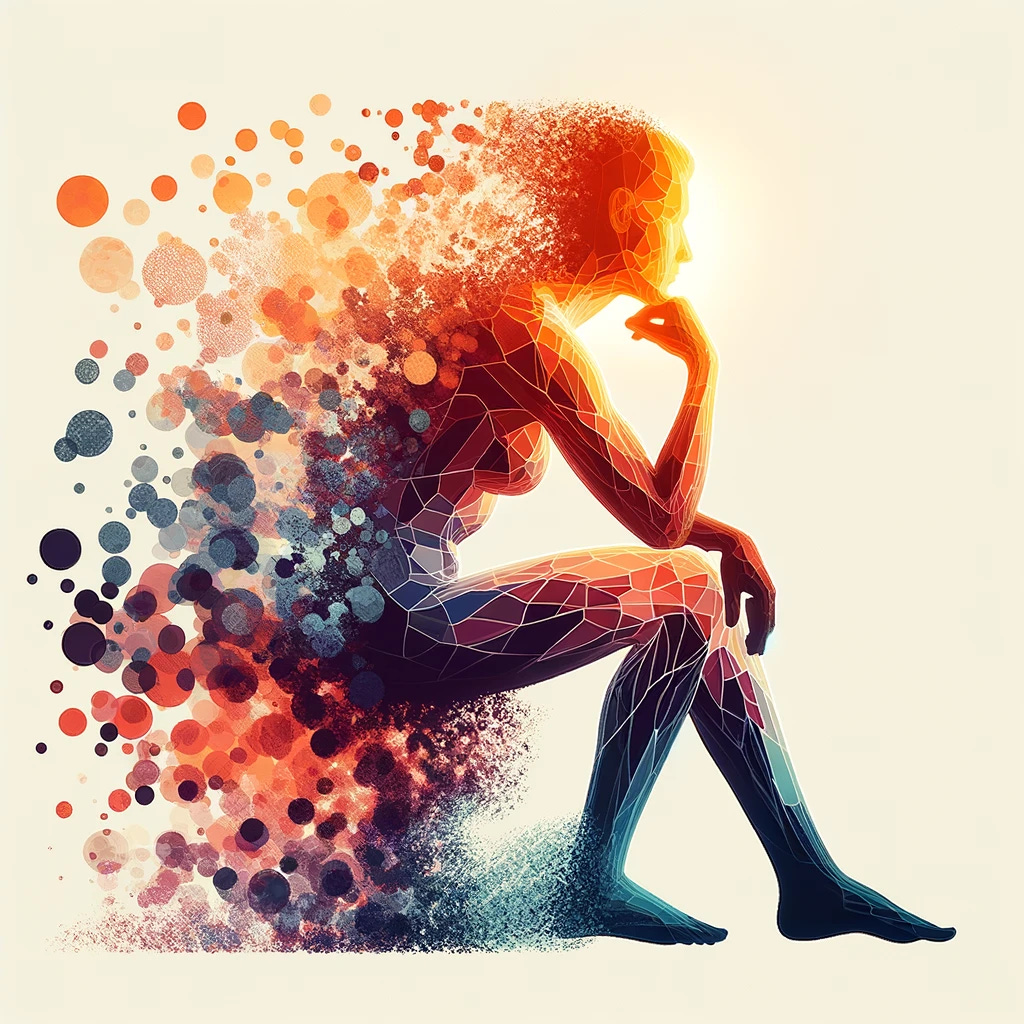
Dabari posits that in Western cultures all too often our bodies are viewed primarily as a means to an end. Vessels to get us from point A to point B or as something to push, beyond our limits to get what we want. Be that through dieting, extreme sport or overworking, we can often forget to check in with ourselves and truly connect with our bodies. In many other parts of the world and throughout other periods in history, connecting with our bodies was something to be celebrated. Communal and individual rituals were embraced and they focused on looking after our bodies from the inside out.
This led me to reflect on how my relationship with my body has transformed since falling ill and the ways I might need to reclaim it. I would say I had a positive relationship with my body before, but I had come to take it for granted. I had spent so much of my life working towards and attaining physical goals, that I believed this momentum would perpetually continue. From competing in triathlons to participating in national swimming competitions as a teenager, my body had always been a reliable partner in reaching various milestones.
Doing sport for so much of life meant at once being highly attuned to my body: knowing how fast it could go, how powerful it was, how many strokes of front crawl were needed before going into a tumble-turn and doing another lap. While at the same time disassociating from the pain, the fatigue and the pushing of boundaries day in and day out.
My past has been a double-edged sword in my recovery process. On the one hand, I believe it has been a guiding light in allowing me to stay motivated towards my recovery. Deep within me is a drive to do as much as I can to improve my health. I used to see recovery as an upcoming physical event where I needed to remain as consistent as I could in order to get to the finish line. On the other hand viewing recovery in these terms can be limiting, as unlike an event that has a beginning middle and an end, recovery is not linear and there is no date in the calendar. I simply have to keep going and hope that little by little my health will improve. Navigating recovery is like using a compass that points in an unknown direction for an indefinite period. I wonder whether viewing my recovery through such a restrictive prism is merely a way for me to cling to old frameworks from the before times.
This book put into words all of the frustration and disappointment I had felt when I initially became unwell. I was grappling with the first time in my life that my body was disobeying me on such a scale. A little at first. Not quite moving at the pace I was used to. Then a lot, as the same attitude I had applied in my life of pushing through was not working. My body refused to comply with my busy schedule and the life I had built for myself.
At first, my tactic was to disassociate yet again, distract and pretend it was not happening. It could not happen.
But now I have tried my best to reconnect with my body. I have become attuned to the humdrum of symptoms in the background of my life. That’s why I’m in a lot less pain than I was and I no longer push through.
I have since realised that the control I felt over my body was an illusion. Bodies can be unruly and my body is not at my whim and something that must obey me. I have stopped trying to fit this body in a box that no longer fits. And in doing so, my body is not obeying me, but we have found an equilibrium.
With love,
Naïma